




Lightweight Concrete
The first modern use of lightweight concrete(LWC) was recorded in 1917 when the American Emergency Fleet Corporation started building ships with this mixture due to its high strength and performance. Since then, LWC has become common building material for various applications. But what is lightweight concrete, and why is it so widely used in the construction industry?
History
The body of the building material is relatively heavy. So many experiments have been done during the 20th century to reduce its weight without disturbing its other properties. During the 1920s and 1930s, various types of lightweight concrete were produced. Originally a Dutch-Belgian invention, Dorisol lightweight concrete has been widely used in Switzerland since the late 1930s and has become popular in many other European countries, including Belgium.
In the early 1920s, the Swedish Ericsson tested various aerated concrete samples and placed the mixtures in an autoclave to speed up the curing process. Almost by accident, he discovered the improved properties of autoclaved aerated concrete. He obtained a patent in 1924 and found a building materials manufacturer named Carl August Karlen, who wanted to invest in a factory five years later.
Concrete became very popular in Sweden from 1935 onwards, and immediately after World War II, it became one of the most important building materials in the world. The concrete production process was exported from Sweden to other countries, and licenses were sold to Norway, Germany, England, the USA, Spain, Poland, Canada, Belgium and even Japan. Later, in the 1950s and 1960s, lightweight concrete continued to be further developed scientifically and practically in the United States and Japan.
What is lightweight concrete?
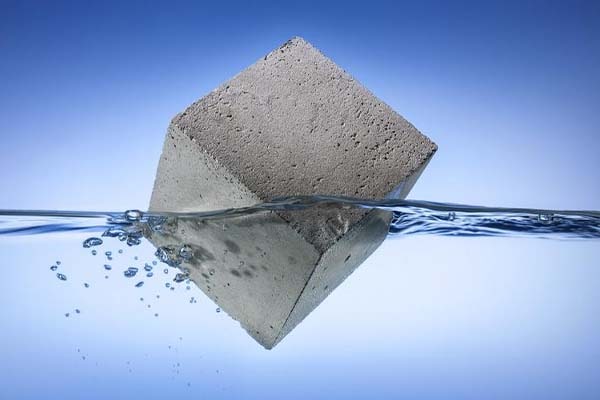
Concrete with porous aggregates is now the most common type of lightweight concrete. The density of this concrete does not exceed 500 to 900 kg / m3 due to the use of light and porous aggregates. This concrete reduces the dead weight of the structure and has better insulation against heat and sound than ordinary concrete.
The compressive strength of such concrete is low, but it is still sufficient for use in precast concrete and reinforced concrete units in areas with common seismic conditions. The compaction of concrete made with these light, and porous aggregates, including clay, perlite, shale, Leica, slate, volcanic pumice and ash, can reduce the weight of ordinary concrete by up to 35%.
In addition to reducing the dead weight of the building, the low tensile modulus and adequate ductility of lightweight concrete may be helpful in the seismic design of structures. Other advantages of concrete include high fire resistance, low thermal conductivity, low expansion coefficient, and easy installation and transportation for prefabricated structural members.
Important features
Some of the most important specifications are as follows
Reduced density
The density of concrete varies from 300 to 1200 kg per square meter. Lighter weight means it is used for insulation purposes, while heavier grades with sufficient strength are suitable for structural applications. The low density of lightweight concrete makes it ideal for prefabricated floor and ceiling units that are easily portable and transportable from the factory to the workshop.
Fire Resistant
This concrete has excellent fire resistance properties. The low thermal conductivity makes this concrete ideal for protecting the structure against heat damages.
Soundproof
Sound insulation in lightweight concrete is usually higher than ordinary concrete. The reason can be pointed to the porous structure of this type of concrete.
Insulation
The thermal insulation of lightweight concrete is about three to six times that of brick and about ten times that of ordinary concrete. It means that it prevents the transfer of hot air outside the building.
Types of lightweight concrete
Lightweight Aggregate concrete
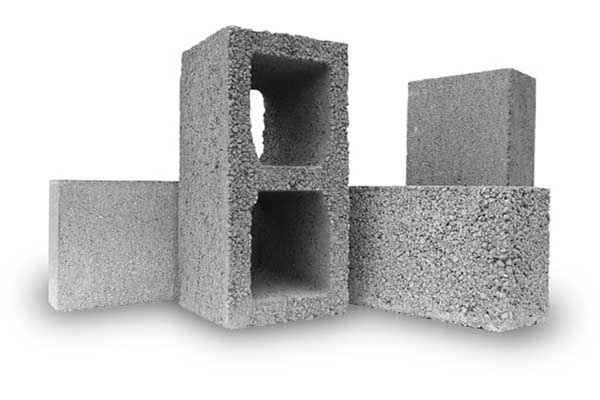
This form of lightweight concrete is produced using lightweight porous aggregates, including clay, perlite, shale, Leica, slate, volcanic pumice, and ash. Weaker aggregates may also be added to the mixture to affect its thermal conductivity.
However, doing so may reduce the strength of the final product. Lightweight aggregate is perfect for precast concrete blocks or steel reinforcements. However, denser varieties show better bonding results between steel and concrete with enhanced protection from steel corrosion.
Aerated or Foamed Concrete
This type of lightweight concrete is also known as autoclaved gas concrete, aerated concrete or foamed concrete since it is developed by introducing large voids into the mortar mass of cement. Voids are typically injected through a chemical reaction or using an air-entraining agent.
Aerated concrete exhibits appropriate thermal insulation and is self-compacting. This makes it ideal for use in hard to reach spaces and sewer systems.
Concrete without granules

Concrete without granules
This form of concrete is created by removing fine aggregates from the mixture. As a result, concrete is formed, consisting only of large cavities and coarse aggregates. That is why fine-grained concrete has better insulation and relatively less shrinkage.
Fine-grained concrete is suitable for load-bearing walls and can be used for some internal and external structures. This type of lightweight concrete should not be used in reinforced concrete, mainly due to its low density.
Application of lightweight concrete
Lightweight structural concrete can be used to build residential and non-residential buildings in seismic areas. This concrete can also be used to build underground trenches. This structural concrete is also used in the construction of foundations, beams, roofs and load-bearing walls in steel and concrete structures.
Sloping walls, cladding and composite slabs on top of metal decks can also be combined with lightweight concrete. This type of concrete is also used to construct wall blocks and prefabricated panels, partition walls, thermal insulation of roofs, insulation of water pipes, thin shell roof structures, bridge decks and other items.
Advantages and disadvantages of lightweight concrete
Lightweight concrete is a flexible and portable building material and requires little support over materials such as steel or ordinary concrete. This makes it cost-effective, especially for large construction projects. The low weight of this type of concrete reduces the dead weight of the building, which is an ideal feature for seismic areas.
In addition, due to its low thermal conductivity and fire resistance, lightweight concrete is an ideal material for insulation against heat damage. Despite the reduction in density, structures made with this type of concrete are unlikely to collapse. Lightweight concrete is less likely to shrink than conventional concrete and shows increased resistance to decay and termite infestation.
However, this product will also have some limitations. Because it has higher water content, it takes longer to dry. In addition, adding too much water may result in a weaker mixture with less compressive strength. In general, lightweight concrete has lower compressive, tensile and shear strength than conventional concrete.
Because lightweight concrete is so porous, it is somewhat difficult to pour this type of concrete in place and create an accurate mixing scheme. Also, the creep and shrinkage for lightweight concrete are higher than conventional concretes, and this should be considered when designing the structure.
Making lightweight concrete
Depending on the strength required of the final product, there are different recipes for making lightweight concrete. Using less sand makes the product lighter but can also make the concrete weaker structurally. A simple recipe for lightweight concrete is to combine eight parts sand, eight parts cement and eight parts perlite to five parts water. Alternatively, you can follow these instructions for most regular concrete mixes.
Whichever recipe you choose, always wear a mask while making concrete to keep dust out of your mouth and lungs. Also, add water slowly to the mixture as the humidity in the air can require you to use more or less water than the recipe calls for. Too little water causes an unreasonable increase in porosity, which decreases the compressive strength of concrete. But too much water weakens the cement paste and disperses the ingredients of this type of concrete.
In A Nutshell
Lightweight concrete is a cost-effective alternative to normal concrete, especially since it doesn’t compromise the structure’s strength. The most important feature of this type of concrete is reducing the weight of the building. This is a great advantage, especially in earthquake-prone areas. The higher porosity of LWC also affects its thermal conductivity, making it suitable for projects that require insulation from heat damage.



Leave A Comment